South Korea Nuri rocket has successfully delivered 15 satellites to orbit, marking a significant milestone in the country’s space exploration efforts.
Overview of the Nuri rocket
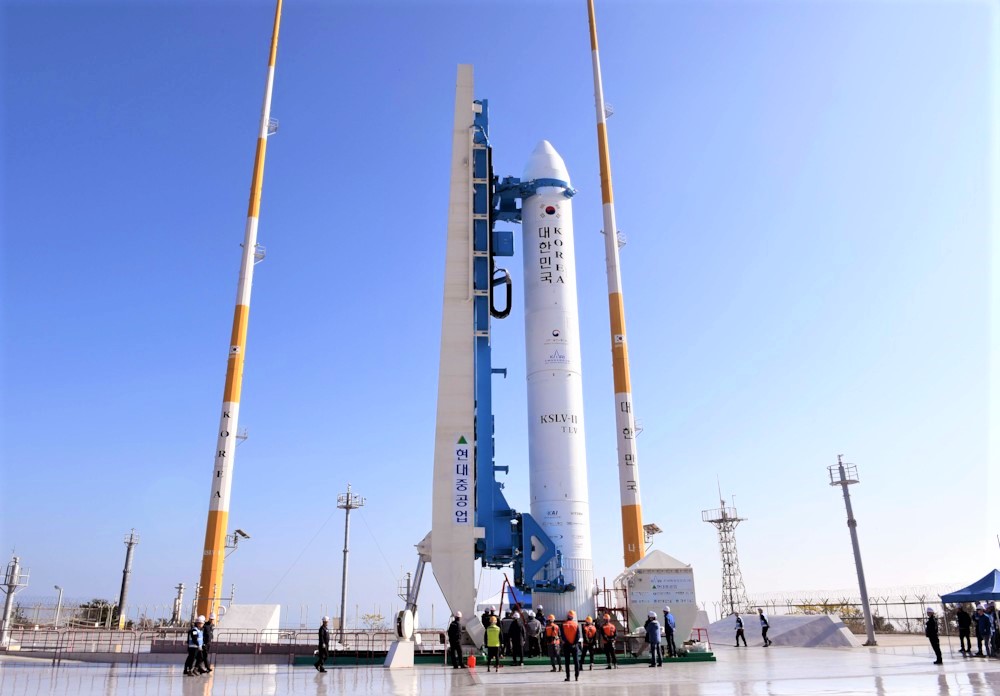
The South Korea Nuri rocket, a significant advancement in the nation’s space capabilities, has successfully delivered 15 satellites to orbit. Developed by the Korea Aerospace Research Institute (KARI), the Nuri rocket, also known as the Korea Space Launch Vehicle II, aims to enhance South Korea’s position in the global space industry.
This launch marks a pivotal moment for the country, showcasing its growing expertise in satellite technology and launch capabilities. The Nuri rocket is designed to carry payloads of up to 1.5 tons to low Earth orbit, making it a competitive option for various commercial and scientific missions.
Key features of the Nuri rocket include:
- Innovative design: Utilizes cutting-edge technology to improve reliability and performance.
- Cost-effective: Aims to reduce the expenses associated with satellite launches.
- Domestic production: Most components are manufactured in South Korea, promoting local industry.
This successful launch not only signifies a technological milestone but also enhances South Korea’s ability to contribute to international space exploration efforts.
Significance of the satellite launch
The recent launch of the South Korea Nuri rocket marks a significant milestone in the nation’s space exploration efforts. By successfully delivering 15 satellites into orbit, this launch not only demonstrates the capabilities of South Korea’s burgeoning space program but also enhances its status in the global aerospace community.
One of the critical implications of this satellite launch includes:
- Technological Advancement: The South Korea Nuri rocket showcases advanced engineering and innovation, positioning the country as a competitive player in the space industry.
- Economic Opportunities: With growing expertise in satellite deployment, South Korea can attract international partnerships and contracts, stimulating economic growth.
- Scientific Research: The satellites deployed will support various research initiatives, contributing valuable data on climate change, agricultural monitoring, and disaster management.
- National Security: Enhanced satellite capabilities bolster South Korea’s national security, providing better surveillance and communication systems.
Overall, the successful launch of the Nuri rocket is a testament to South Korea’s commitment to advancing its space ambitions and achieving greater self-reliance in satellite technology.
Details on the 15 satellites
The recent launch of South Korea’s Nuri rocket successfully placed 15 satellites into orbit, marking a significant achievement in the country’s space exploration efforts. The payload included various types of satellites, each designed for specific purposes.
Among the satellites launched, the following stood out:
- Quick Proven satellite: A demonstration satellite aimed at enhancing communication capabilities.
- Earth observation satellites: These satellites will monitor environmental changes and support disaster management.
- Scientific research satellites: Designed to conduct experiments in microgravity conditions, contributing to advancements in various scientific fields.
- Technology demonstration satellites: These will test new technologies that could be utilized in future space missions.
The successful deployment of these satellites not only showcases the capabilities of the Nuri rocket but also enhances South Korea’s position in the global space race. The launch paves the way for further advancements in satellite technology and cooperation in space exploration.
Future missions planned
Following the successful launch of the Quick Proven satellites, South Korea has ambitious plans for future missions utilizing the Nuri rocket. These upcoming missions aim to expand the country’s capabilities in space exploration and satellite deployment.
Key objectives of future launches include:
- Increased Satellite Capacity: South Korea plans to deploy additional satellites to enhance its communication and reconnaissance capabilities.
- Scientific Research: Future missions will focus on launching satellites that support various scientific research initiatives, including Earth observation and climate monitoring.
- International Collaborations: South Korea is seeking partnerships with other nations and organizations for joint satellite missions, leveraging the Nuri rocket’s reliability.
- Commercial Launch Services: The government aims to open up the Nuri rocket for commercial satellite launches, attracting global customers and boosting the domestic space industry.
As South Korea continues to develop its space program, the Nuri rocket is poised to play a pivotal role in achieving these ambitious goals, further establishing the country as a key player in the global aerospace sector.
Technological advancements in space
Recent advancements in space technology have positioned South Korea as a notable player in the realm of satellite launches. The Nuri rocket, a result of years of research and development, showcases the country’s growing capabilities in space exploration. This rocket is not only a testament to South Korea’s engineering prowess but also reflects a broader trend of investment in innovative aerospace technologies.
Key features of the Nuri rocket include:
- Enhanced payload capacity: The Nuri rocket can efficiently carry multiple satellites into orbit, enabling more cost-effective launches.
- Improved reliability: With rigorous testing and validation, the rocket has demonstrated a high level of dependability, crucial for successful missions.
- Advanced propulsion systems: The Nuri rocket utilizes cutting-edge technology to optimize fuel efficiency and thrust.
The deployment of the Quick Proven satellite alongside others highlights the versatility of the Nuri rocket, paving the way for future missions. As South Korea continues to refine its technological capabilities, the Nuri rocket stands as a symbol of its aspirations in the competitive landscape of space exploration.
Challenges faced during launch
The recent launch of the South Korea Nuri rocket was not without its challenges. Engineers faced several technical obstacles leading up to the launch, which required extensive testing and troubleshooting. One of the primary issues was the rocket’s propulsion system, which needed adjustments to ensure optimal performance during the ascent to orbit.
Moreover, adverse weather conditions posed a significant risk on the scheduled launch day. Strong winds and thick clouds forced the launch team to postpone the operation multiple times, testing their resolve and flexibility. Each delay added pressure to the mission, as the successful deployment of the Quick Proven satellites was crucial for South Korea’s position in the global space race.
Additionally, the synchronization of the launch sequence with the deployment of multiple satellites demanded precise timing. Any miscalculation could have resulted in a failure to place the satellites into their intended orbits. Despite these hurdles, the South Korea Nuri rocket ultimately accomplished its mission, marking a significant milestone in the nation’s space exploration efforts.
International collaboration in space
The successful launch of the South Korea Nuri rocket marks a significant milestone in international collaboration in space exploration. This mission not only demonstrates South Korea’s growing capabilities in rocket technology but also highlights the importance of partnerships in advancing scientific endeavors.
Countries around the world are increasingly recognizing the need to work together to tackle the complex challenges of space travel. The launch involved contributions from various international organizations, including research institutions and aerospace companies, which provided vital support and expertise. These collaborations have enabled the sharing of knowledge and resources, ultimately enhancing the overall effectiveness of space missions.
In addition to technical cooperation, this mission fosters diplomatic ties, encouraging countries to unite for a common goal. The successful deployment of the satellite cluster through the Nuri rocket exemplifies how joint efforts can lead to remarkable achievements in space. As nations continue to collaborate, the future of space exploration looks promising, with potential for groundbreaking discoveries that benefit humanity as a whole.
Impact on global satellite market
The successful deployment of the 15 satellites by the South Korea Nuri rocket has significant implications for the global satellite market. As countries increasingly recognize the importance of satellite technology for various applications, including telecommunications, weather monitoring, and Earth observation, South Korea’s advancements position it as a key player in this competitive arena.
Industry experts suggest that this achievement may lead to increased demand for satellite launches from South Korea, especially among countries looking for reliable and cost-effective options. The Nuri rocket’s proven capabilities could attract international clients who require access to space for their own satellites.
Furthermore, the successful launch could inspire more investments in South Korea’s space sector, fueling innovation and research. As nations strive for technological independence, South Korea’s Nuri rocket may serve as a model for emerging space programs worldwide.
In summary, the impact of the Nuri rocket’s successful launch extends beyond national borders, potentially reshaping the dynamics of the global satellite market and fostering greater collaboration in the field of space exploration.
The successful launch of the South Korea Nuri rocket marks a significant milestone in the country’s space exploration efforts. With the South Korea Nuri rocket delivering the Quick Proven satellite, South Korea aims to enhance its capabilities in satellite technology.
By Kiyoen569 via Openverse